
Farm Fresh Ramen Bowls
2-3 Servings
Total time: 40 min
Ramen night doesn't have to mean a packet of noodles and a foil seasoning pouch. This bowl leans on what's fresh at the farm — mushrooms, bok choy, scallions, a knob of ginger — simmered into a savory miso broth and piled high with whatever else looks good at the stand. It comes together in about the time it takes to boil a pot of noodles, and it's endlessly adaptable, so treat the recipe below as a template rather than a rulebook.
Ingredients
1 tablespoon neutral oil (avocado or sunflower)
8 oz mushrooms, sliced (shiitake, oyster, or a mix — whatever's freshest)
1 small shallot or half a small onion, minced
3 scallions, white and green parts separated and thinly sliced
3–4 cloves garlic, minced
1 tablespoon fresh ginger, grated or ¼ tablespoon powdered ginger
¼ cup Shiso leaves copped (more for garnish)
6 cups vegetable or chicken broth
2–3 tablespoons white or yellow miso paste
2 tablespoons soy sauce or tamari
1 tablespoon rice vinegar
2 small heads bok choy, halved lengthwise or 1 large head bok choy, sliced
8–10 oz ramen noodles (fresh or dried)
2 soft-boiled eggs, halved (optional)
Sesame seeds and chili crisp or sriracha, for serving
Instructions
Prep the vegetables. Wipe the mushrooms clean and slice them. Mince the shallot and garlic, grate the ginger, and slice the scallions, keeping the white and green parts in separate piles. Chop up the shish. Halve, quarter or slice the bok choy lengthwise, leaving the root end intact so the leaves stay together.
Soft-boil the eggs, if using. Lower eggs into gently boiling water and cook for 7 minutes, then transfer to an ice bath. Peel once cooled and set aside.
Brown the mushrooms. Heat the oil in a large pot or Dutch oven over medium-high heat. Add the mushrooms and let them sit undisturbed for 2–3 minutes to pick up some color, then stir and cook another minute or two. Scoop them out with a slotted spoon and set aside.
Build the aromatics. Turn the heat down to medium and add the shallot and scallion whites to the same pot, adding a splash more oil if it's looking dry. Cook for 1–2 minutes until softened, scraping up any browned bits from the bottom. Stir in the garlic and ginger and cook until fragrant, about a minute. Add is shiso and cook another minute or less.
Make the broth. Pour in the broth and whisk in the miso paste until dissolved. Bring to a gentle simmer, then stir in the soy sauce and rice vinegar. Let it simmer for 5 minutes so the flavors come together.
Cook the bok choy and noodles. Add the bok choy to the broth and simmer for 1–2 minutes, then add the noodles and cook until they're tender and the bok choy has wilted. (You can also cook the noodles separately according to package directions and add them to the bowls at the end.)
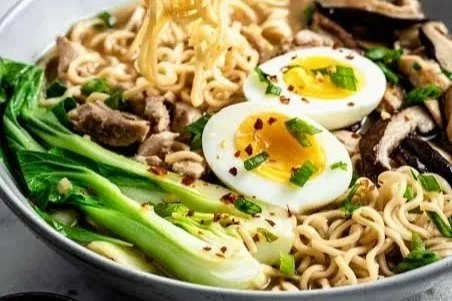
Assemble the bowls. Divide the broth, noodles, and bok choy among bowls. Top with the browned mushrooms, a halved soft-boiled egg, scallion greens, shier, and a sprinkle of sesame seeds. Finish with chili crisp or a drizzle of sriracha if you like some heat.
Seasonal Swaps
The base broth and method here stay the same all year — it's the toppings that shift with what's at the stand:
Spring: Stir in baby spinach or pea shoots at the end, and top with sliced radishes and snap peas for crunch.
Summer: Skip the hot broth and go cold — toss chilled noodles with sliced cucumber, zucchini, sweet peppers, corn, and fresh tomato for a hiyashi chuka–style bowl.
Fall: Roasted acorn or delicata squash, and carrots, makes a hearty topping alongside the mushrooms and bok choy.
Winter: Add shredded cabbage, baby kale, carrots and extra garlic and ginger to the broth for something warming, and swap in a rich beef or bone broth if you have it on hand.
Notes
This is a great way to use up odds and ends from a CSA box — any quick-cooking green (tatsoi, spinach, chard, kale) can stand in for the bok choy.
Leftover broth keeps well in the fridge for a few days; store noodles and toppings separately so they don't get soggy.
For a heartier bowl, add shredded rotisserie chicken, cubed tofu, or a few dumplings while the broth simmers.
